
How to Apply Cementitious Waterproofing Slurry: A Step-by-Step Guide for Contractors
Background
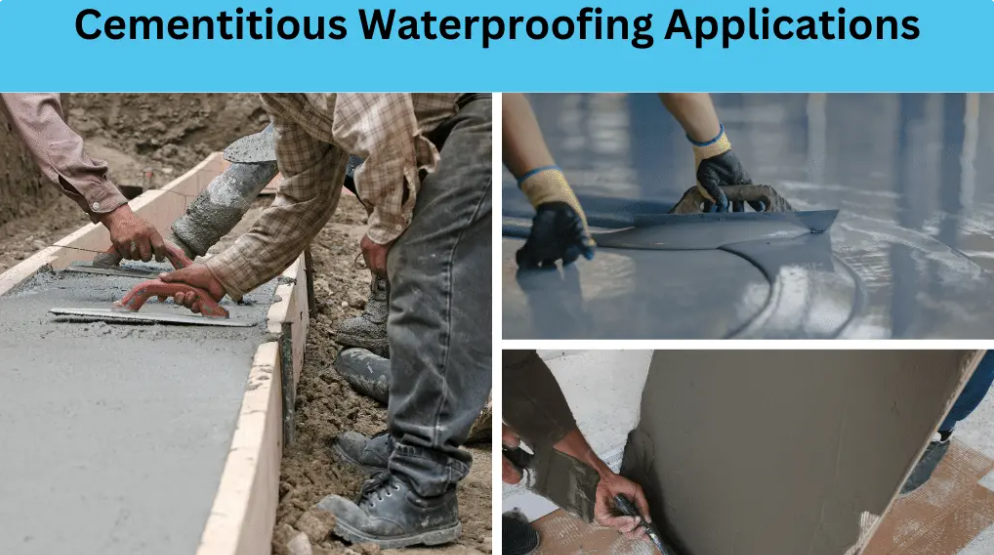
Cementitious waterproofing slurry is a rigid, polymer-modified coating that forms a crystalline waterproofing barrier on concrete and masonry surfaces. Unlike liquid membranes that rely on elasticity, this system penetrates the substrate and reacts with free lime and moisture to form insoluble crystals that block capillaries and cracks. For basement waterproofing, concrete walls, roofs, and swimming pools, it offers superior adhesion, breathability, and durability—especially in negative-side applications where water pressure pushes against the coating. This guide walks you through the correct cementitious waterproofing slurry application process to ensure a monolithic, long-lasting seal.
Preparation — Tools & Materials Checklist
- Cementitious waterproofing slurry (YUNYAN two-component polymer-modified slurry): 1.5–2.0 kg/m² per coat (two coats typical)
- Clean water: 4–5 L per 20 kg dry mix (or as per manufacturer spec)
- Heavy-duty electric mixer (500–700 RPM) with paddle
- Stiff-bristle brush (nylon or polypropylene) or short-nap roller (10–12 mm)
- Angle grinder with diamond cup wheel or wire brush (for surface preparation)
- Pressure washer (min 150 bar) or high-pressure hose
- Mixing bucket (20–30 L capacity)
- Measuring cup (accurate to 0.5 L)
- Spray bottle with clean water (for misting substrate)
- Protective gear: rubber gloves, safety glasses, dust mask, knee pads
- Trowel (for filling cracks > 2 mm)
- YUNYAN crystalline waterproofing additive (optional, for active leaks)
Step-by-Step Instructions
Step 1: Substrate Preparation — The Most Critical Phase
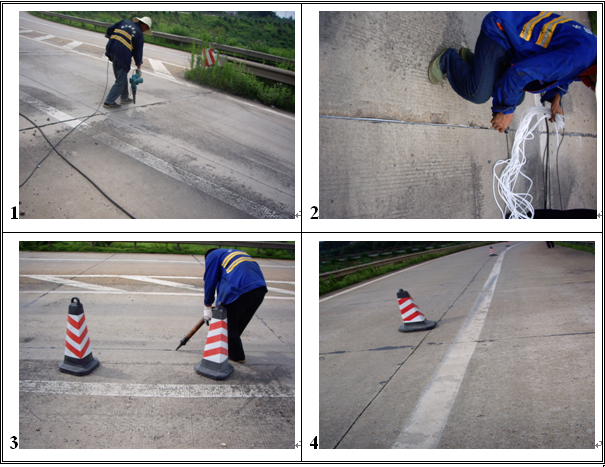
1.1 Remove all contaminants: Use a pressure washer to clean the surface of dirt, oil, grease, curing compounds, and efflorescence. For stubborn coatings, grind with a diamond cup wheel until you expose open-pore concrete. Do not skip this — any bond breaker will cause delamination.
1.2 Repair defects: Fill all cracks wider than 2 mm, honeycombing, and tie-hole gaps with a cementitious repair mortar or the slurry itself thickened to a paste. Allow repairs to cure for 4–6 hours before proceeding.
1.3 Saturate the substrate: Thoroughly wet the concrete surface with clean water using a spray bottle or hose. The surface must be saturated surface dry (SSD) — damp to the touch with no standing water. This prevents the dry concrete from sucking water out of the slurry too quickly, which weakens the bond and reduces crystalline waterproofing effectiveness.
Step 2: Mixing the Cementitious Waterproofing Slurry
2.1 Measure water first: Pour the specified amount of clean water into the mixing bucket. For YUNYAN polymer-modified slurry, this is typically 4.0–4.5 L per 20 kg bag. Adjust slightly for temperature — less water in hot weather (25°C+), more in cold (below 10°C).
2.2 Add powder to water: Slowly add the dry powder while mixing at low speed (300–400 RPM) to avoid clumping. Once all powder is added, increase to 500–700 RPM and mix for 3–4 minutes until you achieve a smooth, lump-free, creamy consistency.
2.3 Let it slake: Allow the mixed slurry to rest for 2–3 minutes, then remix for 30 seconds. This activates the polymer and ensures uniform dispersion. Use within 30–40 minutes — discard any material that begins to thicken or set.
Step 3: First Coat Application
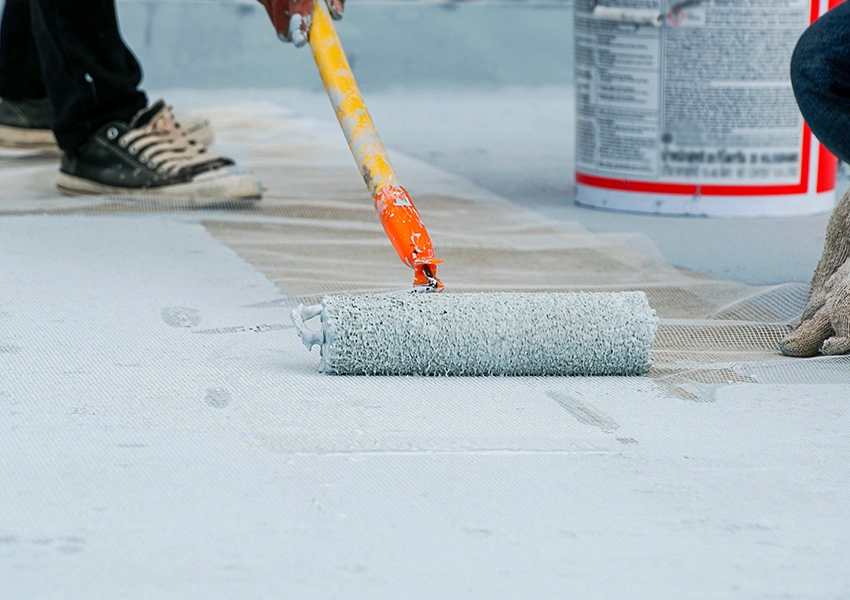
3.1 Apply in one direction: Using a stiff-bristle brush or short-nap roller, apply the first coat at a uniform thickness of 1.0–1.2 mm (wet film). Work the slurry firmly into the substrate — brush in a scrubbing motion to force the material into pores and capillaries. This mechanical keying is essential for crystalline waterproofing performance.
3.2 Maintain wet edge: Work in sections no larger than 2–3 m² at a time. Keep a wet edge to avoid cold joints. If a section begins to skin over, mist lightly with water before overlapping.
3.3 Allow initial set: Let the first coat cure for 4–6 hours (at 20°C, 60% RH). The surface should be firm enough to touch without dragging. Mist with water every 2–3 hours during this period if conditions are hot or windy — premature drying prevents crystal growth.
Step 4: Second Coat Application
4.1 Dampen the first coat: Lightly mist the cured first coat with clean water. It should be damp but not shiny wet.
4.2 Apply perpendicular to first coat: Apply the second coat at the same thickness (1.0–1.2 mm wet film), brushing or rolling in the opposite direction to the first coat. This ensures complete coverage and fills any pinholes or holidays.
4.3 Check for uniformity: After application, inspect for thin spots, runs, or missed areas. The total dry film thickness should be 1.5–2.0 mm after both coats. Use a wet film gauge if available.
Step 5: Curing and Protection
5.1 Moist cure for 3–5 days: Cementitious waterproofing slurry requires moisture to cure and develop crystalline waterproofing properties. Mist the surface with water 3–4 times daily for the first 48 hours, then twice daily for the next 3 days. In hot climates (>30°C), cover with wet burlap or polyethylene sheeting.
5.2 Protect from mechanical damage: Keep foot traffic and equipment off the coated surface for 24 hours minimum. For swimming pools or tanks, wait 7 days before filling with water.
5.3 Final inspection: After 7 days of curing, flood-test the area for 48 hours. Check for damp spots — any moisture indicates a pinhole or thin area that requires a third coat.
Common Mistakes
Mistake 1: Applying to Dry Substrate
What happens: The dry concrete wicks water from the slurry, leaving a weak, powdery coating that flakes off. Crystalline waterproofing cannot form without sufficient water for the chemical reaction.
How to avoid: Always pre-wet the substrate to SSD condition. In hot weather, keep a spray bottle handy and re-mist the surface if it starts drying before you apply.
Mistake 2: Overworking the Material
What happens: Brushing or rolling the slurry after it begins to set (typically 30–40 minutes after mixing) tears the film and creates weak spots.
How to avoid: Mix only what you can apply within 30 minutes. For large areas, work in a team — one mixer, two applicators. Discard any material that has started to thicken.
Mistake 3: Skipping Moist Curing
What happens: Without proper moisture curing, crystalline waterproofing reactions stop prematurely. The coating becomes brittle, cracks, and fails under hydrostatic pressure.
How to avoid: Treat curing as a non-negotiable step. Set a timer for misting intervals. In arid or windy conditions, use a spray system or wet coverings.
Product Recommendations
For reliable cementitious waterproofing slurry application, YUNYAN offers a complete line of polymer-modified and crystalline waterproofing systems:
- YUNYAN Cementitious Waterproofing Slurry — Two-component, polymer-modified slurry ideal for basement waterproofing, concrete walls, and swimming pools. Provides excellent adhesion on damp substrates and develops crystalline waterproofing properties over 7 days.
- YUNYAN Crystalline Waterproofing Additive — Concentrated powder that boosts crystal formation in existing cementitious waterproofing slurry for active leak sealing.
- YUNYAN Rigid Waterproofing Mortar — Single-component, fiber-reinforced mortar for crack repair and waterproofing of manholes, tunnels, and retaining walls.
For roofs and exterior concrete, YUNYAN also recommends a compatible concrete sealer topcoat to enhance UV resistance and abrasion protection.
Need Technical Support?
Every project has unique conditions — substrate type, water pressure, temperature, and timing. For detailed cementitious waterproofing slurry application guidance, custom formulations, or bulk pricing for importers and civil engineers, contact YUNYAN’s technical team:
Email: David@yunyanchina.com
Whatsapp: +86 13710328682
We provide free technical datasheets, mixing calculators, and professional support for large-scale projects.