
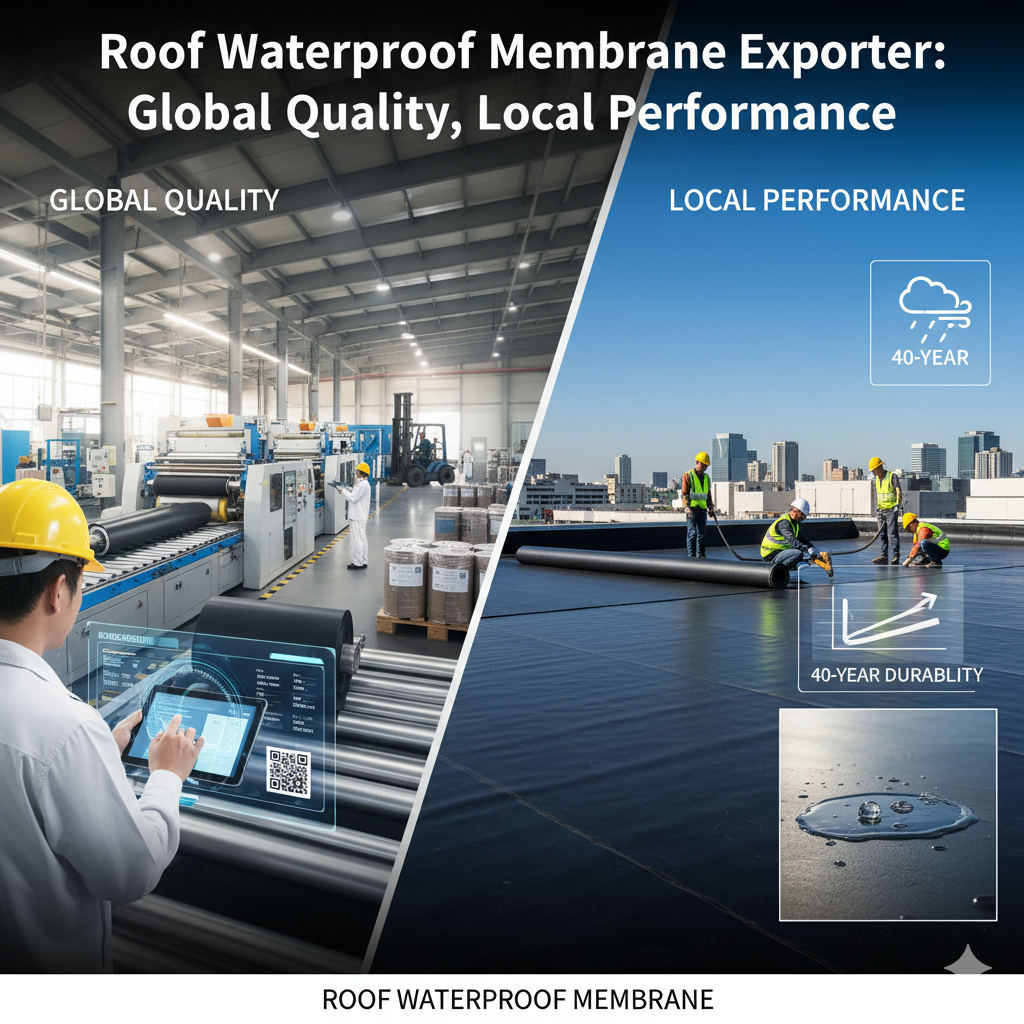
Roof Waterproof Membrane Exporter: Global Quality, Local Performance
Roofing systems are rarely the glamorous part of a building—but they are one of the most critical. Whether it’s a commercial flat roof, industrial warehouse, or rooftop terrace, the waterproof membrane beneath defines how well the structure will withstand rain, ponding, UV, and thermal cycling. A reputable roof waterproof membrane exporter ensures that what’s on the roll performs exactly as specified, no matter where it lands.
Reliable export suppliers like YUNYAN adopt rigorous manufacturing, testing, and logistics processes to guarantee performance across climates and applications.
1. Why Standard Roofing Membranes Fail Overseas
When membranes are shipped across borders and installed under variable conditions, failures often arise from:
-
Thickness deviation caused by inconsistent production
-
Poor seam welding or bonding especially in field trials
-
Material incompatible with local climate (extreme sun, freezing, wind)
-
Packaging and shipping damage reducing physical integrity
-
Incorrect certification or export documentation leading to import issues
Exporters must align manufacturing with global logistics, certification standards like ISO 9001, CE, ASTM, and ensure every roll arrives undamaged and ready for installation.
2. Core Membrane Technologies in Export Roofing Market
Modern roof waterproof membranes shipped globally generally fall into these categories:
| Type | Materials | Key Properties | Typical Use |
|---|---|---|---|
| TPO (Thermoplastic Polyolefin) | Single-ply synthetic | UV reflective, energy saving | Flat commercial roofs |
| APP/Modified Bitumen | Bitumen + polymer modifier | Excellent overlap adhesion, torchable | Garages, industrial roofs |
| EPDM (Ethylene Propylene Diene Monomer) | Synthetic rubber | High flexibility, cold weather performance | Low-slope roofs in cold climates |
| Liquid Applied Membrane | Polyurethane / acrylic | Seamless, suited to detail areas | Terraces, domes, irregular roofs |
Export data shows strong global demand: for “Roof Membrane” export shipments, China, USA and Germany lead with ~18% each of total shipments.
3. What a Genuine Exporter Does Well
A professional roof waterproof membrane exporter handles much more than product packaging. Key practices include:
-
Quality control across batches — roll thickness, tensile strength, elongation, seam weld strength
-
Climate compliance — specifying membranes for tropical, arid, cold zones
-
Export documentation — HS codes (eg. 3921 for membranes)
-
Logistics chain — protecting rolls during sea freight (humidity control, stacking)
-
After-sales support — providing installation guidelines, compatibility with local standards
For example, companies export APP-modified bitumen membranes that specify 3.0–4.0 kg/m² nominal weight for export versions.
4. Comparing Export Grade vs. Domestic Grade Membranes
| Property | Domestic Grade | Export Grade (Global Market) |
|---|---|---|
| Thickness variation | ±10% | ±5% |
| Tensile strength | Moderate | High (>15 MPa typical) |
| Elongation at break | Low (50–100%) | Higher (200–300%+) |
| Documentation | Basic | Full test reports, ISO/CE certificate |
| Packaging & transport | Standard | Reinforced rolls, export crates |
| Climate adaptability | Local | Multi-zone specification |
Global clients increasingly demand “export grade” membranes—not simply “roof waterproof membrane” but verified reliability for overseas installation.
5. Export Applications Where Membrane Quality Means Success
-
Large-scale commercial flat roofs – long spans, heavy mechanical loads, need durable TPO or APP.
-
Industrial warehouses in harsh climates – thermal cycling, chemical exposure, reinforcement needed.
-
Rooftop solar installations – reflective membranes reduce heat gain and support solar mounts.
-
Renovation of aging waterproof layers – removing old layers, requiring compatible export-ready membranes.
-
Green roof systems – combining waterproof membrane and insulation layers in export bundles.
6. How to Choose the Right Export Membrane for Your Project
Checklist for buyers and distributors:
-
Verify tensile strength and elongation values per roll
-
Confirm export documentation and labeling for your country
-
Choose membrane type suited to climate (e.g., EPDM for cold, TPO for hot, APP for industrial)
-
Ask for roll packaging standards (e.g., pallets, shrink wrap, protective layers)
-
Ensure after-sales support: installation guidelines, warranty terms
A supplier like YUNYAN offers factory-direct export solutions, full documentation, and global logistics support tailored to distributor needs.
7. Building a Reliable Supply Chain for Waterproof Roofing Membranes
An export project involves many stakeholders: manufacturer, freight forwarder, port authority, local installer. A robust export strategy includes:
-
Pre-shipment inspection (thickness, consistency)
-
Certified packaging to prevent moisture gain in transit
-
Clear labeling with HS code, roll weight, lot number
-
Logistics tracking and customs support
-
On-site installation guides and warranty registration
By aligning manufacturing excellence with export logistics, the waterproof membrane becomes a system—not just a product.
The Roof Begins with Quality Beneath the Surface
Your rooftop may shine in today's sunlight—but its longevity is defined by what sits underneath.
Selecting a trusted roof waterproof membrane exporter ensures that layers beneath the tiling or waterproofing finish perform exactly as promised.
For global‐standard membrane systems, documentation, and export assistance, visit YUNYAN’s website.
For inquiry about full export packages or distributor terms, contact our team via our contact page.