
Epoxy Floor Coating vs Polyurethane Floor Coating: Which Flooring System Is Right for Your Project?
Why This Comparison Matters
If you're a flooring contractor, industrial project manager, or distributor, you've likely faced this decision: epoxy floor coating or polyurethane floor coating? Both are high-performance options, but they serve different applications, budgets, and durability requirements. Choosing wrong means premature failure, costly rework, or unsatisfied clients.
The real-world pain point is simple: you need a floor that withstands the specific abuse of your project—whether that's heavy forklift traffic in a warehouse, chemical spills in a factory, or aesthetic demands in a showroom. And you need to balance epoxy floor coating cost per square foot against long-term maintenance and lifespan.
This comparison breaks down both options honestly, so you can make an informed procurement decision.
Option A: Epoxy Floor Coating
Pros
- Superior adhesion to concrete substrates—forms a thick, monolithic bond
- Excellent chemical resistance against oils, solvents, and mild acids
- High compressive strength—ideal for industrial floor coating applications
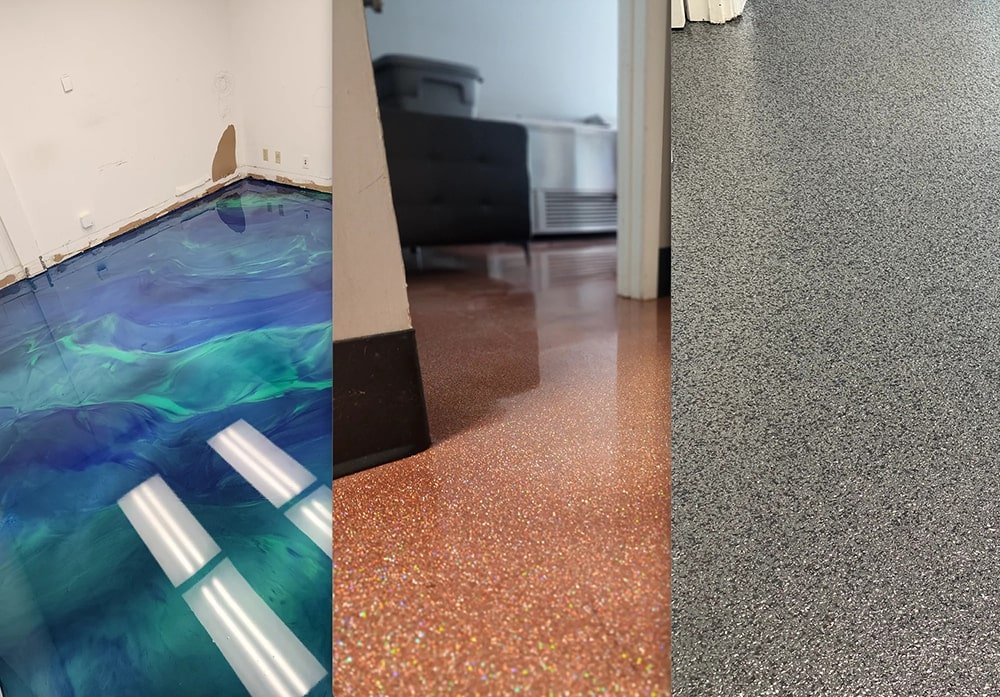
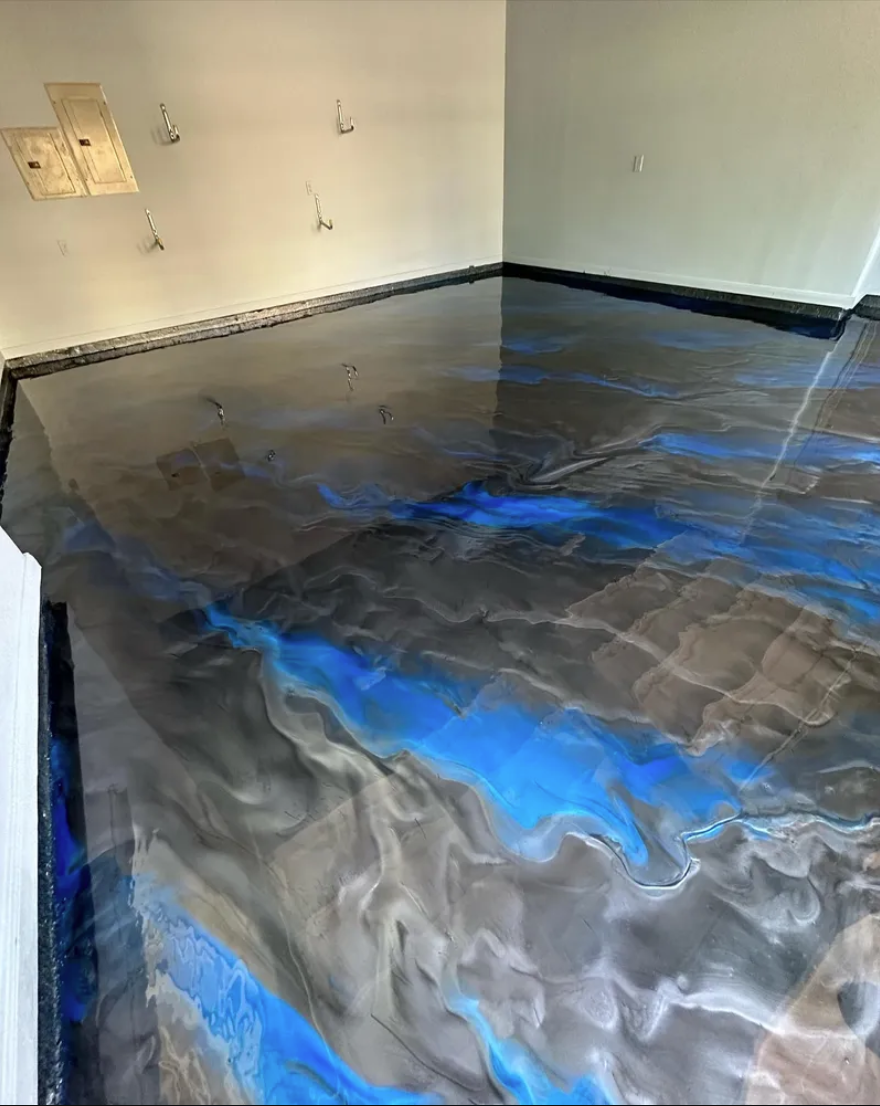
- Wide decorative range: from solid colors to decorative epoxy floor coating for river table finishes and metallic effects
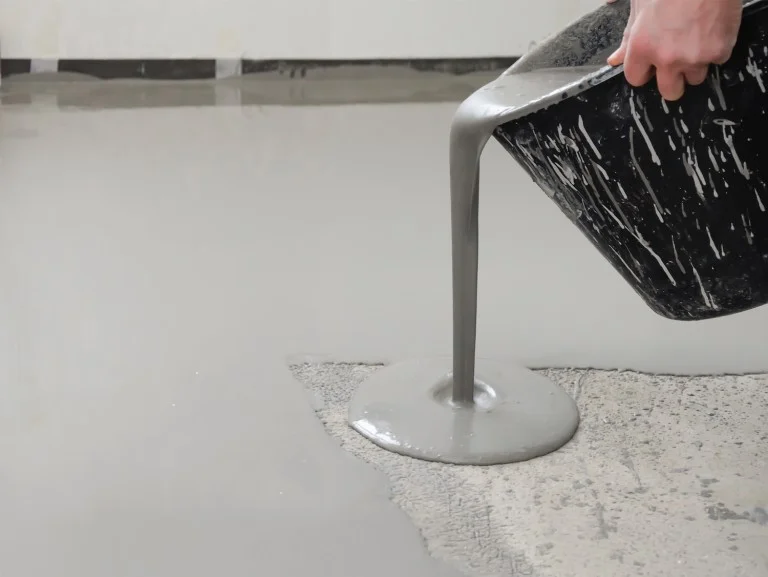
- Self-leveling properties available: self-leveling epoxy floor coating for showroom creates mirror-smooth surfaces
- Lower upfront cost compared to polyurethane systems
Cons
- UV-sensitive: yellows and chalks when exposed to direct sunlight
- Longer cure time: typically 24-48 hours before light traffic, 5-7 days for full cure
- Less flexible: can crack under thermal cycling or substrate movement
- Requires meticulous surface preparation—any moisture or contamination causes delamination
- VOC concerns with some formulations, though low VOC epoxy floor coating for commercial buildings options exist
- Slip resistance requires additional aggregates or epoxy floor coating slip resistant option additives
Option B: Polyurethane Floor Coating
Pros
- UV-stable: maintains color and gloss in sun-exposed areas
- Higher flexibility: accommodates thermal expansion and minor substrate movement
- Faster cure time: foot traffic in 6-12 hours, full cure in 2-3 days
- Better abrasion resistance: excellent for epoxy floor coating for high traffic areas
- Superior impact resistance—less prone to chipping
- Lower VOC formulations more readily available
Cons
- Weaker adhesion to concrete—requires primer and meticulous substrate prep
- Higher material cost—typically 20-40% more than epoxy floor coating
- Thinner film build—less forgiving of substrate imperfections
- Limited decorative options—fewer metallic, flake, or 3D effects
- More sensitive to moisture during application
- Professional installation recommended—DIY application is riskier
Head-to-Head Comparison Table
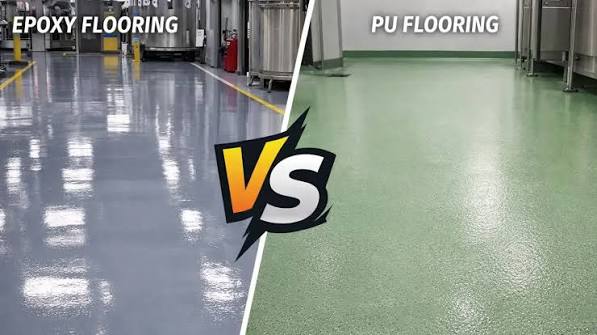
| Dimension | Epoxy Floor Coating | Polyurethane Floor Coating |
|---|---|---|
| Adhesion to concrete | Excellent (5-7 MPa bond strength) | Good (3-5 MPa, primer-dependent) |
| Chemical resistance | Excellent (solvents, acids, oils) | Good (moderate chemical resistance) |
| UV stability | Poor (yellows in sunlight) | Excellent (color-stable) |
| Flexibility | Low (brittle, cracks under movement) | High (accommodates thermal cycling) |
| Cure time (full service) | 5-7 days | 2-3 days |
| Abrasion resistance | Very good (H25 wheel: 20-30 mg loss) | Excellent (H25 wheel: 10-20 mg loss) |
| Typical film thickness | 2-10 mm (thick build possible) | 0.5-2 mm (thin film) |
| Cost per square foot | $3-8 (material only) | $5-12 (material only) |
| Decorative options | Extensive (metallic, 3D, flake, solid) | Limited (solid, some flake) |
| Slip resistance options | Available (aggregate broadcast) | Available (textured additives) |
| Suitable for DIY | Moderate (for how to apply epoxy floor coating yourself) | Low (professional recommended) |
Selection Guide: Which to Choose by Scenario
Choose Epoxy Floor Coating When:
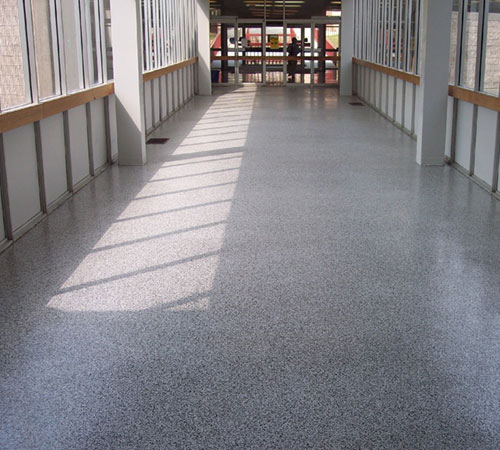
Scenario 1: Industrial Warehouse Flooring Your client needs durable warehouse flooring that withstands heavy pallet jack traffic, occasional chemical spills, and high point loads. Epoxy floor coating for industrial warehouses delivers the compressive strength and chemical resistance needed. A 100% solids solvent-free epoxy system provides thick build and zero VOC concerns. YUNYAN's 3D Epoxy Resin for River Table and Floor Coating can support warehouse applications with proper aggregate broadcast for slip resistance.
Scenario 2: Showroom or Commercial Interior You're bidding on self-leveling epoxy floor coating for showroom where aesthetics matter—mirror-smooth finish, metallic effects, or 3D designs. Epoxy's self-leveling properties and decorative versatility make it the clear choice. Decorative epoxy floor coating for river table techniques can be scaled to commercial floors for stunning visual impact.
Scenario 3: Garage or DIY Renovation Homeowners searching for best epoxy floor coating for garage want durability, easy application, and cost-effectiveness. How to apply epoxy floor coating yourself is straightforward with two-part epoxy kits. The epoxy floor coating cost per square foot is budget-friendly compared to polyurethane systems.
Choose Polyurethane Floor Coating When:
Scenario 1: Sun-Exposed Loading Docks or Mezzanines If the floor receives direct sunlight through windows or is partially outdoors, polyurethane's UV stability prevents yellowing. Epoxy vs polyurethane floor coating durability in UV environments clearly favors polyurethane.
Scenario 2: Temperature-Fluctuating Environments Cold storage facilities, bakeries, or unheated warehouses experience thermal cycling. Polyurethane's flexibility prevents cracking where epoxy would fail.
Scenario 3: High-Traffic Corridors with Quick Turnaround Hospitals, schools, or retail spaces that can't afford days of downtime benefit from polyurethane's faster cure. Epoxy floor coating for high traffic areas still performs well, but polyurethane wins on schedule constraints.
Hybrid Approach: Epoxy Base + Polyurethane Top Coat
Many experienced contractors apply an epoxy floor coating as a base/primer for adhesion and build, then finish with a polyurethane epoxy top coat for UV stability and abrasion resistance. This combines the best of both systems at a moderate cost increase.
Practical Buyer/Contractor Checklist
Before specifying your epoxy flooring system, verify these 7 points:
-
☐ Substrate moisture test — Perform ASTM F2170 or calcium chloride test. Epoxy fails above 4% moisture vapor emission rate.
-
☐ Surface profile — Ensure CSP 3-5 (concrete surface profile) via shot blasting or diamond grinding. Epoxy needs mechanical anchor.
-
☐ Temperature range — Verify operating environment. If above 120°F or below 50°F, adjust formulation.
-
☐ Traffic analysis — Classify traffic type (foot, forklift, steel wheels) and frequency. Heavy traffic may require self-leveling epoxy with aggregate.
-
☐ Chemical exposure — List chemicals present. Obtain chemical resistance data for your specific epoxy floor coating formulation.
-
☐ Slip resistance requirement — Specify COF (coefficient of friction) ≥0.5 for wet areas. Plan for epoxy floor coating slip resistant option aggregates.
-
☐ Maintenance plan — Epoxy floor coating maintenance requirements include routine cleaning with pH-neutral detergents and periodic recoat every 3-5 years for high-traffic zones.
Where to Source Your Epoxy Floor Coating
For contractors and distributors looking for where to buy epoxy floor coating in bulk, YUNYAN offers export-ready solutions with OEM and private label options. Our 3D Epoxy Resin for River Table and Floor Coating supports both decorative and industrial applications.
YUNYAN advantages that help you decide, specify, install, and maintain:
- Technical guidance: Our team provides substrate preparation protocols, mixing ratios, and application parameters for epoxy floor coating installation steps
- Packaging flexibility: Available in bulk drums, kits, or private-labeled containers
- Sample support: Request samples to test adhesion, color matching, and cure behavior before full procurement
- Sustainable options: Ask about sustainable epoxy floor coating for green building formulations with reduced carbon footprint
- Export support: We handle international shipping documentation and compliance
For epoxy floor coating repair and renovation projects, our products can be applied over existing coatings with proper surface preparation.
Get Specifications and Request Samples →
Browse our full product range: Epoxy Flooring and Resin Products