
How to Apply Polyurethane Waterproof Coating: A Step-by-Step Guide for Contractors
Background
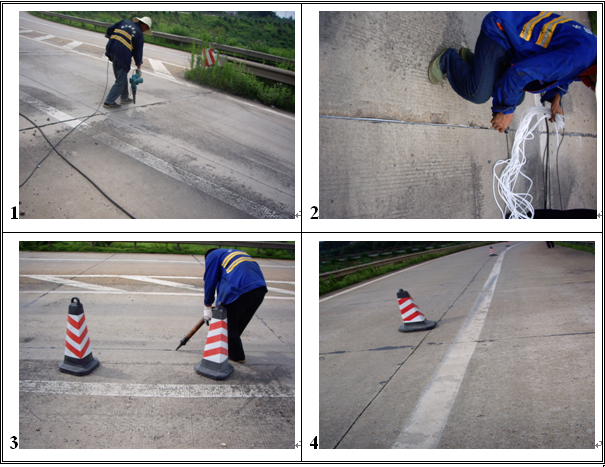
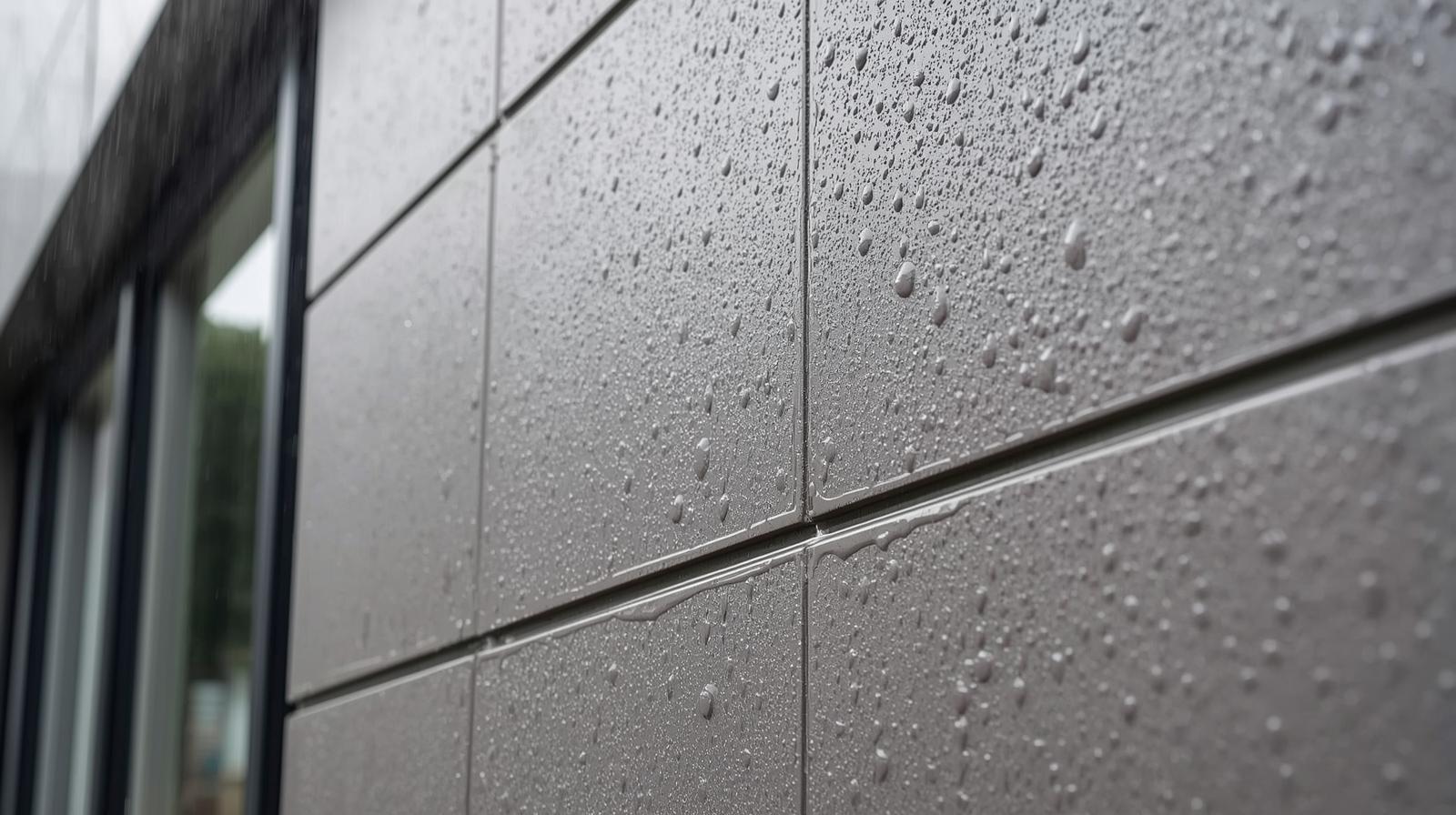
Polyurethane waterproof coating is one of the most reliable liquid applied membrane systems available today. Unlike sheet membranes, PU waterproofing forms a seamless, elastomeric coating that bonds directly to substrates—making it ideal for roof waterproofing, balcony waterproofing, and concrete decks. This solvent based polyurethane waterproof coating delivers exceptional crack-bridging properties, meaning it flexes with substrate movement without tearing. For contractors and architects specifying polyurethane waterproof coating for concrete, this guide walks you through proper application to avoid callbacks and failures.
Preparation
Tools Checklist
- Heavy-duty stirrer or drill with mixing paddle
- Medium-nap roller (10–12 mm) or stiff-bristle brush
- Notched trowel (for vertical surfaces)
- Primer brush (75 mm)
- Tape measure
- Utility knife
- Protective gloves and goggles
- Respirator (for solvent based products)
Materials Checklist
- Polyurethane waterproof coating (calculate 1.5–2.0 kg/m² per coat for two coats)
- Primer (compatible with your chosen PU waterproofing system)
- Crack-bridging fabric (polyester or fiberglass, 50–100 g/m²)
- Cementitious repair mortar (for filling cracks and joints)
- Masking tape and plastic sheeting (for protecting adjacent areas)
Surface Preparation
- Ensure concrete substrate is clean, dry, and free of laitance, oil, or curing compounds.
- Repair all cracks wider than 0.5 mm using cementitious mortar.
- Grind or shot-blast to achieve a rough, open-pore surface (minimum 1.5 mm profile).
- Vacuum thoroughly—dust prevents adhesion of the polyurethane waterproof coating.
Step-by-Step Instructions
Step 1: Prime the Substrate
- Apply a thin, even coat of primer over the entire surface using a brush or roller.
- For porous concrete, use a solvent based polyurethane waterproof coating primer (low viscosity) to penetrate and seal.
- Allow primer to cure fully—typically 4–6 hours at 20°C, but check your polyurethane waterproof coating data sheet for exact times.
- Do not apply over damp or wet surfaces; moisture content must be below 4% (use a moisture meter).
Step 2: Apply the First Coat of Liquid Applied Membrane
- Stir the polyurethane waterproof coating thoroughly for 2–3 minutes until uniform.
- Pour material into a paint tray or bucket.
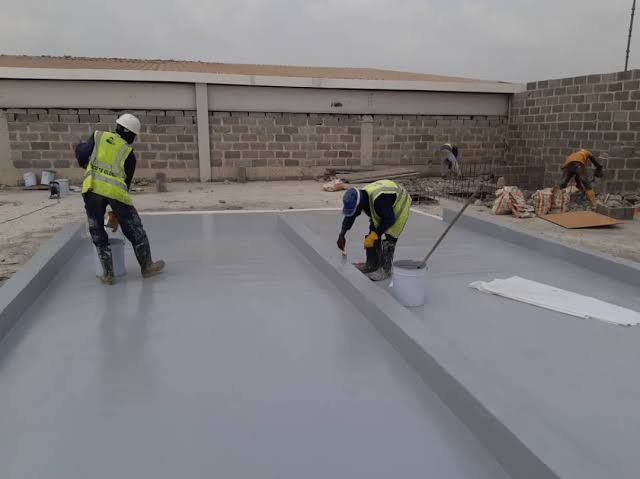
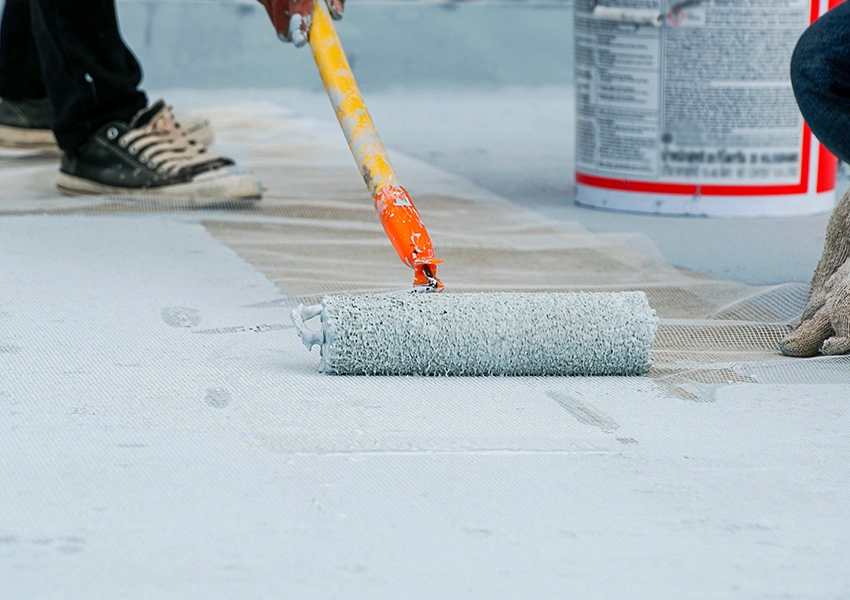
- Apply using a roller in a consistent direction—maintain a wet edge to avoid lap marks.
- Target thickness: 0.8–1.2 mm wet film thickness per coat. Use a wet film gauge to verify.
- For balcony waterproofing, work from the drain outward to ensure proper slope.
- If using water based polyurethane waterproof coating, work in temperatures above 5°C and below 35°C. For solvent based products, ventilation is critical—wear a respirator.
Step 3: Embed Reinforcement Fabric (for Cracks and Joints)
- While the first coat is still wet (within 30–60 minutes), lay polyester or fiberglass fabric over cracks, joints, and transitions.
- Press fabric into the wet coating using a brush or roller, ensuring full saturation.
- Overlap fabric strips by 50 mm minimum.
- For roof waterproofing at parapet walls, extend fabric 100 mm up the vertical surface.
Step 4: Apply the Second Coat
- Wait for the first coat to become tack-free but not fully cured (typically 6–12 hours, depending on humidity and temperature).
- Apply the second coat at right angles to the first (cross-hatch pattern).
- Target total dry film thickness: 1.5–2.0 mm for standard applications, 2.5–3.0 mm for roof waterproofing or areas with heavy foot traffic.
- Feather edges at termination points to avoid a sharp step.
Step 5: Inspect and Cure
- After the second coat has cured (24–48 hours), inspect for pinholes, thin spots, or blisters.
- Touch up any defects with additional polyurethane waterproof coating applied by brush.
- Allow full cure before flooding or traffic—typically 72 hours at 25°C.
- For bathrooms, conduct a flood test: dam the drain, fill with 25 mm water, and hold for 24 hours. Mark any leaks.
Common Mistakes
-
Applying over damp concrete
Moisture trapped under the liquid applied membrane causes blistering and delamination. Always test with a moisture meter—below 4% is safe. -
Insufficient mixing
Polyurethane waterproof coating contains fillers and pigments that settle. Stirring for less than 2 minutes leaves unmixed material, resulting in soft spots and inconsistent thickness. -
Skipping primer on smooth surfaces
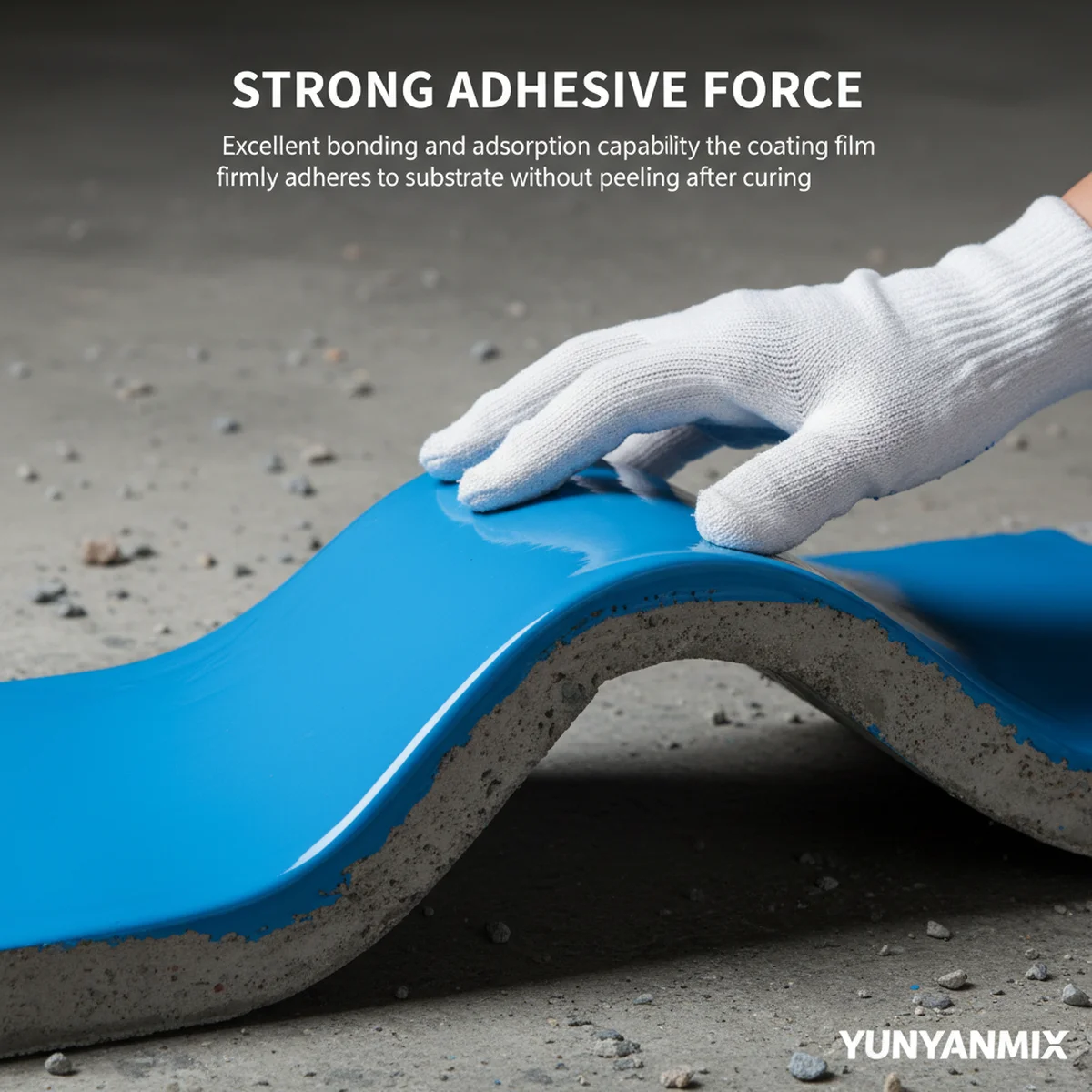
On polished concrete or old tiles, primer is essential for bonding. Without it, the elastomeric coating may peel within months, especially under UV exposure.
Product Recommendations
For contractors seeking reliable performance, YUNYAN’s cementitious waterproofing materials include high-solids polyurethane waterproof coating systems. Our solvent based polyurethane waterproof coating for concrete offers 400% elongation and passes ASTM C836 adhesion tests. For interior bathrooms, our water based polyurethane waterproof coating provides zero VOC compliance with the same crack-bridging membrane performance. Always request the polyurethane waterproof coating data sheet for your specific substrate and climate.
Technical Support
Need help selecting the right polyurethane waterproof coating for your project? Contact our team at yunyanchina.com/contact-us for application guidance, sample requests, and distributor pricing.