
PU Top Coat for Concrete Floors: The Contractor’s Guide to Specifying, Applying, and Sourcing
If you’ve ever watched a beautiful epoxy floor fail within eighteen months—yellowing under sunlight, peeling in a damp corner, or scratching under a forklift—you already know the problem isn’t the concrete. It’s the protection.
The floor top coat you choose determines whether your project looks pristine at handover or becomes a liability by the first warranty call. For flooring contractors, architects, and distributors navigating the growing demand for sustainable and low-maintenance surfaces, understanding the science behind a PU top coat isn’t optional. It’s the difference between a referral and a redo.
1. The Hidden Problem: Why Concrete Floors Fail Without the Right Protection
Raw concrete is a paradox. It’s strong enough to hold up a skyscraper, yet porous enough to absorb oil, moisture, and chemicals within hours. Uncoated or poorly sealed concrete floors in warehouses, garages, and commercial spaces suffer from:
- Surface dusting – Fine particles abrade off the slab, contaminating sensitive environments and increasing maintenance costs.
- Chemical staining – Engine oil, hydraulic fluid, and cleaning agents penetrate deep, creating permanent discoloration.
- Moisture vapor transmission – Ground moisture migrates upward, causing coating delamination and white efflorescence.
- Abrasion damage – Constant wheel traffic and foot traffic wear down unprotected surfaces, creating rough, unsightly patches.
Traditional solutions—like a standard epoxy top coat—offer decent hardness but fall short in key areas. Epoxy is brittle, UV-sensitive, and prone to yellowing when exposed to sunlight. For exterior patios, sunlit showrooms, or moisture-prone industrial floors, the wrong top coat becomes a recurring cost center.
This is where a polyurethane top coat vs epoxy top coat decision matters. A PU top coat delivers flexibility, UV stability, and abrasion resistance that epoxy alone cannot match. For contractors and specifiers, knowing when to choose which is the first step toward building a reputation for durable, low-maintenance floors.
2. The Technical Science: What Makes a PU Top Coat Work
A polyurethane sealer is not a single product but a family of formulations engineered for specific performance demands. Unlike epoxy, which forms a rigid, brittle film, polyurethane’s molecular structure allows for elastic movement—making it ideal for floors that experience thermal cycling, impact, or slight substrate movement.
Component Breakdown
| Component | Function | Typical Performance Impact |
|---|---|---|
| Polyol resin | Forms the base polymer structure | Determines flexibility and adhesion |
| Isocyanate hardener | Cross-links with polyol to cure | Controls drying time and final hardness |
| UV stabilizers | Absorb and dissipate UV radiation | Prevents yellowing in sun-exposed areas |
| Aliphatic vs. aromatic structure | Aliphatic resists UV; aromatic is harder but yellows | Aromatic for hidden areas, aliphatic for visible high gloss |
| Solvent vs. water-based carrier | Carries resin to substrate | Water-based lowers VOC; solvent-based improves flow |
Performance Benchmarks (Typical Industry Ranges)
| Property | Typical PU Top Coat Range | Relevant Standard |
|---|---|---|
| Abrasion resistance (Taber CS-17) | 40–80 mg weight loss per 1000 cycles | ASTM D4060 |
| Adhesion to concrete | 1.5–3.0 MPa (pull-off) | ASTM D4541 |
| Tensile elongation | 15–40% (vs. 2–5% for epoxy) | ASTM D638 |
| UV resistance (QUV accelerated) | 500–2000 hours without significant yellowing | ASTM G154 |
| VOC content | 0–250 g/L depending on formulation | EN 13300 / LEED v4.1 |
| Drying time before foot traffic | 4–12 hours depending on system | — |
A low VOC polyurethane floor coating is increasingly specified in commercial projects pursuing LEED or BREEAM certification. Water-based and high-solids formulations offer the same protective benefits with a fraction of the solvent load, making them viable for occupied buildings and environmentally sensitive projects.
3. Comparison: Traditional Approach vs. YUNYAN PU Top Coat Solution
When you’re standing on a job site with a deadline, a budget, and a client who wants “something that lasts,” the choice between systems becomes practical. Here’s how the traditional approach stacks up against working with a manufacturer like YUNYAN.
| Decision Factor | Traditional Approach (Local Epoxy Only) | YUNYAN PU Top Coat Solution |
|---|---|---|
| UV stability | Epoxy yellows within 6–12 months outdoors | PU resists yellowing for years with aliphatic formulations |
| Flexibility | Rigid; cracks when substrate moves | Elastic; bridges micro-cracks and thermal movement |
| Abrasion resistance | Moderate; suitable for light foot traffic | High; designed for polyurethane top coat for high traffic industrial floors |
| Moisture tolerance | Requires strict moisture testing; prone to blistering | Better tolerance in PU top coat for moisture resistant floor systems |
| VOC compliance | Often solvent-heavy; may fail green building requirements | Low-VOC options available for sustainable projects |
| Procurement | Multiple suppliers, inconsistent quality | Direct from a PU top coat flooring material manufacturer with export experience |
| Technical support | Limited to local distributor knowledge | YUNYAN provides application guidance and formulation support |
| Customization | Off-the-shelf only | OEM/private label options for distributors |
For a PU top coat for garage floor maintenance, the decision is even clearer. Garages experience temperature swings, tire chemicals, and occasional impacts—all conditions where polyurethane outperforms epoxy.
4. Application Scenarios: Where PU Top Coat Delivers Maximum Value
Understanding the technology is one thing. Knowing where to deploy it is another. Here are three concrete use cases where a PU top coat is the right specification.
Scenario 1: Polished Concrete in a Showroom or Retail Space
Substrate: Polished concrete with a densifier applied. Project type: High-end retail, automotive showroom, or office lobby. Demand: High gloss, UV stability near windows, easy maintenance.
Polished concrete is beautiful, but it stains. A PU top coat for polished concrete sealing preserves the aesthetic while adding a sacrificial layer that resists scuffs and spills. YUNYAN can support projects with a high gloss floor sealer formulation designed to enhance the natural reflective quality of polished surfaces while protecting against daily wear.
Installer consideration: Ensure the polished surface is clean and fully cured before applying the top coat. A thin, even coat (typically 100–200 g/m²) prevents pooling and uneven gloss.
Scenario 2: Industrial Warehouse with Forklift Traffic
Substrate: New or existing concrete with moderate surface defects. Project type: Logistics center, manufacturing plant, or distribution hub. Demand: Abrasion resistance, chemical resistance, minimal downtime.
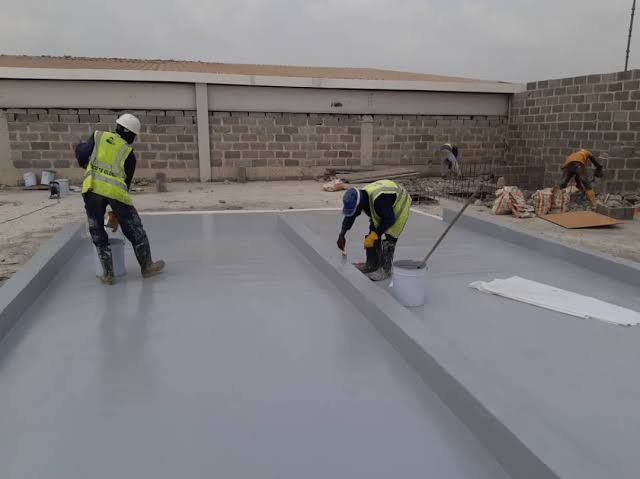
This is the domain of a polyurethane top coat for high traffic industrial floors. The elasticity of PU absorbs the shock of wheeled loads without cracking, while the seamless membrane prevents oil and coolant from penetrating. For a low maintenance polyurethane top coat for warehouses, YUNYAN can advise on system build-up—typically a primer, epoxy body coat, and PU top coat—to balance cost with durability.
Buyer checklist:
- Verify the top coat’s Taber abrasion value against your expected traffic volume.
- Confirm the system can be applied at the substrate’s moisture levels.
- Plan for a cure time that matches your operational shutdown window.
Scenario 3: Exterior Concrete Patio in a Hospitality Project
Substrate: Exterior concrete slab exposed to UV and rain. Project type: Hotel terrace, restaurant patio, or residential outdoor living area. Demand: UV resistance, slip resistance (when specified), freeze-thaw stability.
A polyurethane top coat for exterior concrete patios must survive what interior floors never face: direct sunlight, standing water, and temperature swings. Aliphatic PU formulations with UV stabilizers are the only reliable choice here. YUNYAN can support this application with guidance on slip-resistant additives and proper surface preparation to prevent moisture entrapment.
Architect note: Specify a matte or satin finish for exterior areas where glare could be an issue. High gloss is stunning indoors but can be blinding in direct sun.
5. OEM & Export Capabilities: Sourcing PU Top Coat at Scale
For distributors and contractors managing multiple projects, the sourcing question is as critical as the technical one. Buying from a local supplier often means limited formulations, inconsistent batch quality, and no room for private labeling.
YUNYAN, as an experienced OEM PU top coat floor coating supplier, brings manufacturing-scale advantages that translate directly to your bottom line:
- Production capacity – Large-volume manufacturing ensures consistent supply for multi-site projects.
- Certifications – YUNYAN operates with ISO-certified quality management systems, ensuring every batch meets documented specifications.
- Export expertise – With 20+ years of experience shipping to 60+ countries, YUNYAN handles the logistics complexity of international procurement, including documentation, packaging for transit, and compliance with destination-country regulations.
- Customization – From viscosity adjustments for different application methods (roller, spray, trowel) to tinting for specific color requirements, YUNYAN can adapt formulations to your market’s needs.
- Private label – Build your own brand with reliable manufacturing behind it. YUNYAN supports private label programs for distributors looking to differentiate in their local market.
- Sample support – Before committing to a container, request samples to test adhesion, gloss, and abrasion resistance in your own conditions.
For a contractor pricing a job, the PU top coat price per square meter for contractors becomes more competitive when sourcing directly from a manufacturer. You control the markup, you control the supply chain, and you control the quality narrative.

6. Why Choose YUNYAN for Your PU Top Coat Needs
In a market flooded with options, here’s what makes YUNYAN a dependable partner for flooring contractors, architects, and distributors who can’t afford surprises.
- 20+ years of manufacturing experience – We’ve seen the industry evolve, and our formulations have evolved with it.
- Export to 60+ countries – From tropical climates to freezing winters, our products perform across diverse environmental conditions.
- ISO-certified quality systems – Documentation you can trust for project specifications and audits.
- Technical guidance – Our team helps you navigate PU top coat application problems and solutions, from substrate moisture issues to curing temperature constraints.
- Sustainable options – For commercial projects pursuing green certifications, YUNYAN can supply sustainable polyurethane floor coating for commercial projects with low-VOC formulations.
- Flexible packaging – From 5L pails for small jobs to bulk drums for industrial applications, we match packaging to your workflow.
- Responsive communication – Real answers from real technical staff, not a call center script.
When you’re specifying a UV resistant top coat for a sun-exposed atrium or an abrasion resistant coating for a forklift lane, the product name on the spec sheet is your reputation. YUNYAN’s combination of manufacturing depth, export capability, and responsive support makes us a partner you can stake your name on.
Practical Buyer’s Checklist: Specifying and Sourcing PU Top Coat
Before you finalize your next floor coating project, run through this checklist:
- Assess substrate conditions – Test moisture vapor emission rate (MVER) and concrete pH. PU is forgiving, but it’s not magic.
- Match formulation to exposure – Aliphatic for UV-exposed areas, aromatic for hidden or low-light zones.
- Confirm VOC requirements – Check whether your project has LEED, BREEAM, or local regulatory VOC limits.
- Verify drying time vs. schedule – A PU top coat drying time before foot traffic of 4–12 hours affects your project timeline. Plan applications to maximize overnight curing.
- Request performance data – Ask for Taber abrasion, adhesion, and elongation values on paper. If a supplier can’t provide them, walk away.
- Test before committing – Order samples and apply them on site mock-ups. Nothing replaces real-world validation.
- Plan for maintenance – Specify cleaning and recoat intervals to your client. A low-maintenance floor still needs a mop.
- Source with redundancy – Work with a manufacturer that can supply consistent quality at scale, like YUNYAN, to avoid mid-project shortages.
From Our Desk to Your Job Site
A floor is more than a surface. It’s a statement of craft, a measure of care, and a promise of durability. The PU top coat you choose carries that promise forward—through every forklift pass, every sun-soaked afternoon, every mop bucket of cleaning solution.
At YUNYAN, we’ve spent two decades refining that promise into formulations that contractors trust and clients appreciate. Whether you’re sealing a polished concrete lobby, protecting a warehouse floor, or building a brand around private-label coatings, we’re ready to support your next project.
Explore YUNYAN’s floor coating solutions or contact our technical team to discuss your specific requirements. The right top coat is out there. Let’s find it together.