

Epoxy Floor Coating: Transforming Concrete Surfaces into Seamless Strength
Concrete is durable—but not invincible.
In real-world factory floors, it faces forklifts grinding its surface, chemical spills etching through pores, and moisture rising through unseen cracks. Over time, the same strength that supports your production line begins to erode silently from within.
That’s why more industrial facilities now turn to epoxy floor coatings—a material that doesn’t just protect concrete, but engineers a new layer of endurance.
1 | Hidden Weakness Beneath Every Industrial Floor
Every factory manager has seen it—powdered gray dust near machines, oil stains that never leave, or micro cracks that keep spreading after every shift.
These aren’t aesthetic issues. They’re signs of subsurface failure.
Concrete suffers because:
-
Capillary pores absorb oil, chemicals, and water vapor.
-
Microcracks expand under mechanical stress or freeze-thaw cycles.
-
Carbonation and corrosion attack embedded steel over time.
-
Dusting compromises hygiene and product quality in clean facilities.
Once these issues set in, maintenance becomes a recurring cost.
Epoxy coatings stop this chain reaction by forming a dense, impermeable film that seals concrete at a molecular level.
2 | The Chemistry of Strength: How Epoxy Works
Epoxy floor coating is more than “paint.” It’s a chemical reaction that transforms liquid resin into a high-density, cross-linked solid.
| Component | Description | Function |
|---|---|---|
| Epoxy Resin (Part A) | Bisphenol-A or Bisphenol-F base | Provides adhesion and chemical resistance |
| Hardener (Part B) | Polyamine / Polyamide compound | Initiates cross-link polymerization |
| Fillers & Pigments | Silica, calcium carbonate, color paste | Adds texture, color, and thickness |
| Additives | Anti-slip, leveling, UV stabilizers | Improves flow and durability |
When Part A and Part B are mixed, polymer chains bond tightly with the concrete substrate. The resulting layer:
-
Resists acids, alkalis, and solvents
-
Blocks water absorption
-
Strengthens the surface by up to 300% compared with bare concrete
Under ASTM D4541, high-quality coatings achieve adhesion strength >2.5 MPa, ensuring the film becomes part of the structure itself—not just a cover.
3 | Comparing Systems: Which Coating Fits Your Facility
Not all epoxy systems are created equal. The right choice depends on traffic load, chemical exposure, and environmental conditions.
| System Type | Thickness | Key Properties | Recommended Use |
|---|---|---|---|
| Roll-Coat Epoxy | 0.2–0.5 mm | Basic dust-proof protection | Light-duty areas, offices |
| Self-Leveling Epoxy | 1–3 mm | Smooth, seamless, aesthetic | Warehouses, showrooms |
| Mortar Epoxy System | 3–6 mm | High impact and load-bearing | Mechanical workshops |
| Epoxy PU Hybrid | 2–4 mm | UV-resistant, flexible | Semi-outdoor, sunlight-exposed zones |
| Anti-Static Epoxy | 1–2 mm | Conductive and dust-free | Electronics, lab facilities |
👉 Pro tip: For areas with vibration or heavy traffic, hybrid systems with elasticized polyurethane enhance crack bridging and prolong lifespan.
4 | Inside the Factory: Where Reliability Begins
Behind every glossy floor is an exact manufacturing process.
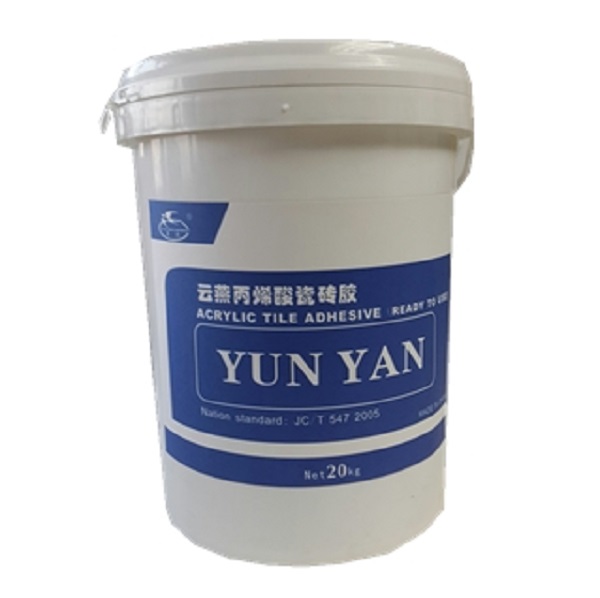
At YUNYAN’s epoxy floor coating factory, quality isn’t an afterthought—it’s engineered into every batch.
Production Workflow:
1️⃣ Raw material inspection — every resin batch is tested for viscosity and purity.
2️⃣ Precision mixing — digital dosing systems guarantee ±0.2% accuracy between resin and hardener.
3️⃣ Defect testing — samples undergo pull-off and abrasion tests (ASTM C579, D4060).
4️⃣ Accelerated aging simulation — exposure to heat, UV, and salt spray predicts real-life durability.
This meticulous process ensures that each batch of YUNYAN epoxy performs consistently, whether it’s protecting an automotive plant or a clean pharmaceutical lab.
5 | Step-by-Step Application Guide: From Prep to Perfection
A flawless epoxy floor doesn’t start with coating—it starts with surface preparation.
Here’s the typical workflow used by professional contractors:
| Step | Process | Technical Note |
|---|---|---|
| 1 | Grinding & Cleaning | Remove laitance, oil, and dust; ensure CSP 3–4 profile |
| 2 | Primer Application | Improves adhesion; seals pores in substrate |
| 3 | Crack Repair & Filling | Epoxy mortar used to fill joints or voids |
| 4 | Self-Leveling Layer | Poured and spread evenly for uniform thickness |
| 5 | Topcoat Sealing | Adds UV, chemical, or anti-slip protection |
Environmental controls: Ambient humidity < 75%, substrate moisture < 5%.
Skipping these steps often leads to bubbling, delamination, or premature chalking.
6 | Real-World Applications Across Industries
| Industry | Challenge | Solution | Outcome |
|---|---|---|---|
| Food & Beverage | Frequent washdowns, hygiene control | PU-modified epoxy | Non-slip, antibacterial surface |
| Automotive Plants | Heavy equipment & tire friction | Mortar epoxy system | Long-term abrasion resistance |
| Warehousing | Dust control, forklift traffic | Self-leveling epoxy | Clean, reflective floors |
| Electronics | Static discharge | Conductive epoxy system | ESD-safe surface |
| Retail & Showrooms | Aesthetic durability | High-gloss epoxy | Mirror-like finish |
A factory floor is no longer just a utility—it’s a reflection of operational discipline and brand image.
Epoxy coatings deliver both performance and presentation.
7 | Avoiding Common Failures: Lessons from the Field
Even good materials fail when shortcuts are taken. Common mistakes include:
-
Applying coating on damp concrete (traps moisture → bubbles).
-
Ignoring mixing ratio precision (leads to soft, tacky surfaces).
-
Rushing curing time (reduces full cross-linking).
-
Skipping anti-slip additives (safety hazard in wet areas).
For professional results, installation should always follow manufacturer’s technical data sheet (TDS) and ambient condition checks before coating.
8 | Future Trends: Smarter, Safer, More Sustainable Floors
Epoxy coatings are evolving toward sustainability and intelligence:
-
Low-VOC, solvent-free formulations meet environmental standards.
-
Nano-silica reinforcement boosts hardness while maintaining flowability.
-
Self-healing microcapsules repair minor scratches automatically.
-
Reflective pigments enhance lighting efficiency in warehouses.
At YUNYAN, R&D teams are advancing hybrid resin systems that balance eco-safety with industrial strength, ensuring modern coatings perform as hard as they protect.
A Floor That Lasts Is a Business That Lasts
Epoxy floors are more than protection—they’re a foundation for efficiency, hygiene, and safety.
They let factories operate cleaner, faster, and longer without constant maintenance cycles.
To learn more about YUNYAN’s industrial epoxy systems, visit our official website for detailed datasheets and case studies.
For engineering support, color consultation, or bulk OEM inquiries, reach out via our contact page—and let every step in your facility stand on strength.