
Why Waterproof Paint for Walls Matters More Than You Think
Walk into any damp building, and you’ll smell the problem before you see it.
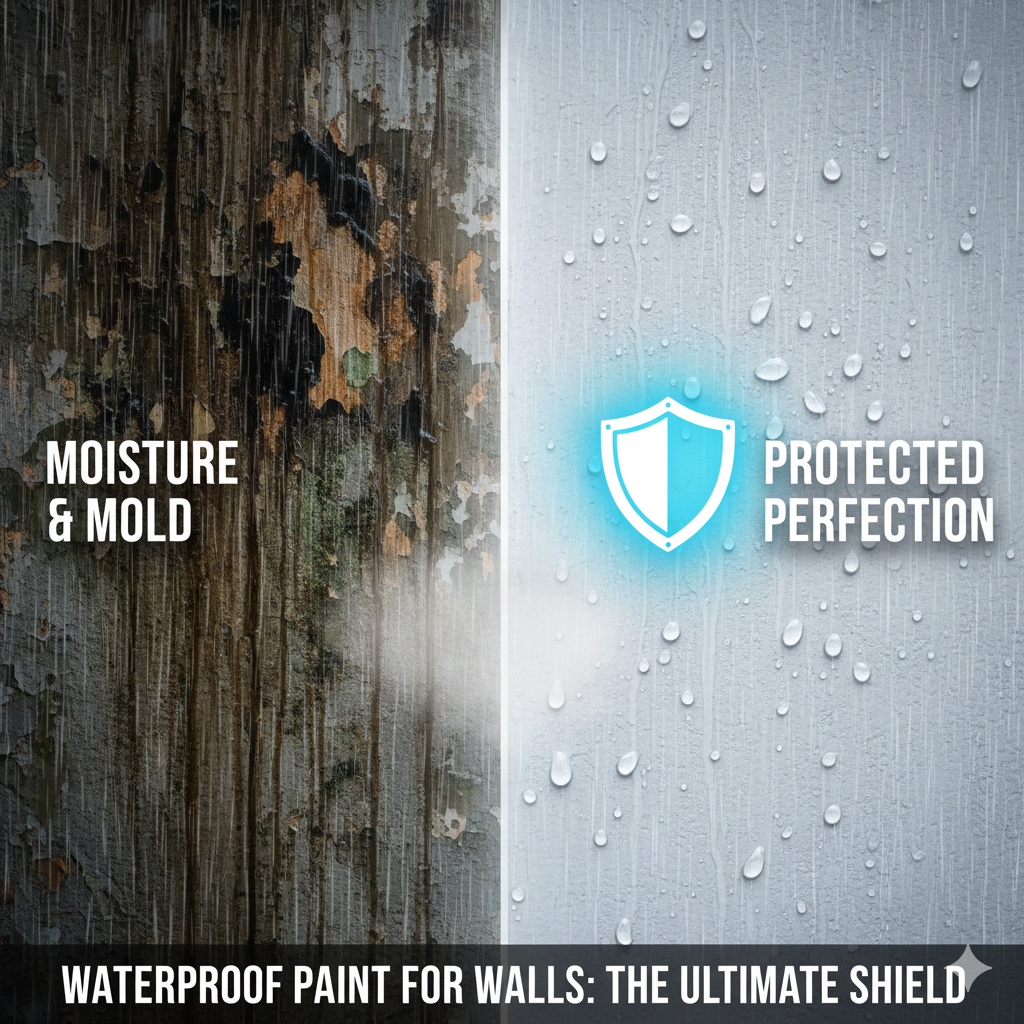
Behind peeling paint and discolored walls lies a structural issue—moisture infiltration.
When humidity seeps through unprotected surfaces, it doesn’t just stain the paint; it breaks down plaster, causes mold growth, and corrodes reinforcement.
That’s why modern waterproof paint for walls has evolved far beyond its decorative roots—it’s a functional barrier designed to stop liquid water while letting trapped vapor escape.
1. The Hidden Pain: Why Walls Fail Against Moisture
Most wall failures come down to one simple fact: paint alone is not protection.
Here’s what typically happens:
-
Capillary absorption pulls moisture from soil or rain into porous concrete.
-
Thermal expansion causes hairline cracks, opening paths for water.
-
Condensation forms on cool interior walls due to poor vapor control.
-
Unsealed substrates trap humidity, leading to blistering and peeling.
Even premium paints fail if the wall beneath is still absorbing and releasing moisture.
In short, the real fight isn’t against water—it’s against water movement.
2. The Science Behind Waterproof Paint
Unlike traditional emulsions, waterproof paints use polymer networks and hydrophobic additives to stop capillary flow.
| Component | Role | Function |
|---|---|---|
| Acrylic or PU Polymer | Base binder | Creates elastic waterproof film |
| Silane/Siloxane | Hydrophobic modifier | Repels water molecules |
| Titanium dioxide | Pigment & UV shield | Maintains color stability |
| Anti-fungal agents | Biological control | Prevents black mold & algae |
| Microporous fillers | Breathability | Allows vapor diffusion |
These ingredients interact to form a breathable barrier—impermeable to liquid water, yet open to air exchange.
It’s the same principle used in breathable roofing membranes, now adapted for walls.
3. Choosing the Right Type: Interior vs Exterior
| Criteria | Interior Wall Paint | Exterior Wall Paint |
|---|---|---|
| Environment | Bathrooms, kitchens, living spaces | Facades, balconies, exposed walls |
| Resistance | Mold, humidity | UV, rain, temperature cycling |
| Finish | Matte / Satin | Semi-gloss / Textured |
| Film thickness | 150–250 μm | 300–500 μm |
| Typical lifespan | 5–7 years | 8–10 years |
Key takeaway: Interior spaces need breathability; exteriors need durability.
4. Common Myths About Waterproof Paint
-
“Any glossy paint is waterproof.” False. Gloss affects aesthetics, not permeability.
-
“Adding more coats solves leaks.” Wrong. Without proper substrate sealing, leaks persist.
-
“Exterior paints can be used indoors.” Unsafe—many contain biocides or high VOCs.
The right waterproof system always starts with substrate assessment, not just paint choice.
5. From Chemistry to Construction: How YUNYAN Paints Are Engineered
What separates a professional-grade coating from retail paint is process control:
-
Automated polymer blending ensures consistent elasticity.
-
Humidity chamber testing replicates tropical and cold environments.
-
Adhesion testing (EN ISO 4624) confirms long-term bonding.
-
VOC compliance (EU Directive 2004/42/EC) ensures environmental safety.
Each formula undergoes UV aging and crack-bridging tests before shipment—ensuring real performance, not just color retention.
6. Real-World Use Cases: From Homes to High-Rise Exteriors
| Application | System Type | Core Benefit |
|---|---|---|
| Bathroom & Kitchen Walls | Acrylic waterproof paint | Prevents condensation and mildew |
| Exterior Facades | Silicone-acrylic hybrid | UV and rain protection |
| Concrete Balcony Walls | PU-based elastic coating | Handles structural movement |
| Interior Renovation | Low-VOC matte finish | Breathable and odor-free |
| Coastal Buildings | Silane-infused coating | Salt and humidity resistance |
By tailoring the polymer base to the local climate, YUNYAN coatings maintain flexibility and color stability even under heavy UV exposure or constant humidity.
7. Application Tips That Make or Break Results
1️⃣ Always start with a moisture reading—walls must be below 10% humidity.
2️⃣ Use a compatible primer to improve adhesion.
3️⃣ Apply two coats at right angles for even film thickness.
4️⃣ Avoid painting under direct sunlight or during rain.
5️⃣ Cure at ambient temperature for at least 48 hours.
A waterproof paint is only as effective as its application discipline.
8. Choosing Waterproof Paint by Environment
| Environment | Recommended Paint Type | Notes |
|---|---|---|
| Bathroom | Breathable anti-mold acrylic | Use vapor-open systems |
| Kitchen | Stain-resistant satin finish | Easy cleaning surface |
| Outdoor wall | Silicone hybrid paint | Enhanced UV stability |
| Basement | Cementitious paint | Pressure-resistant barrier |
| Hallway / Office | Low-VOC latex paint | Safe for indoor air quality |
When in doubt, match flexibility to stress and permeability to climate—that’s the core of smart selection.
Built for Beauty, Designed for Defense
Paint shouldn’t just color your walls—it should protect what’s beneath.
Waterproof coatings deliver that invisible armor, combining chemistry, breathability, and durability into one film.
To explore YUNYAN’s full range of waterproof coatings, visit the official website.
For project-specific formulations or OEM inquiries, reach our team through the contact page—and keep every wall dry, bright, and durable for years.